
5-minute rescue
-
1
Stand up
-
2
Water
-
3
Face
-
4
Shoes
-
5
One tiny task
What it feels like
You sit down to begin and your body files a complaint. The task is visible. Your hands will not cooperate. Time passes in a thick way. You might scroll, or stare, or rehearse the first sentence until it has no meaning left.
People call this procrastination. Sometimes it is. Often it is executive dysfunction: the start costs more than the task, so the start never happens, and then you pay for both.
Why reminders don't solve it
A reminder assumes you forgot. You did not forget. You received the ping, felt a spike of dread, and now the task is associated with being interrupted. More pings teach your nervous system that the work is an alarm.
Lists have the same problem when they are long. Fifty items is not clarity. It is a wall. The brain looks for a door and finds a mural.
Why tiny actions work
Tiny actions lower the activation cost. They do not require you to feel ready. They give your body a completed motion, which is often enough to unlock the next one. If it does not, you still have a win that is not a lie.
This is not cheating. This is matching the tool to the actual bottleneck: initiation, not knowledge.
A 5-minute rescue
Stand up. Drink water. Wash your face. Put on shoes. Do two minutes of one task. No journaling. No cold plunge. No gratitude prompt. If you have been gone for days, this is also Rescue Mode: no shame, no reset, pick the easiest win.
What to do after the rescue
Two minutes might be the whole session. That is allowed. The rescue is not a promise that you will finish the backlog. It is proof that initiation is still available, even when it felt offline for hours or days.
If you continue, pick one thread and stay with it until the next natural break. Do not reopen the whole pile. If you stop, log the win and leave. Tomorrow, run the same five steps before you negotiate with the task again. Consistency at the starting line beats intensity in the middle.
Building a runway you will actually use
The rescue works because it is boring on purpose. No new personality required. No optimization spiral. The same five moves every time means your body learns a path instead of debating a new plan each morning.
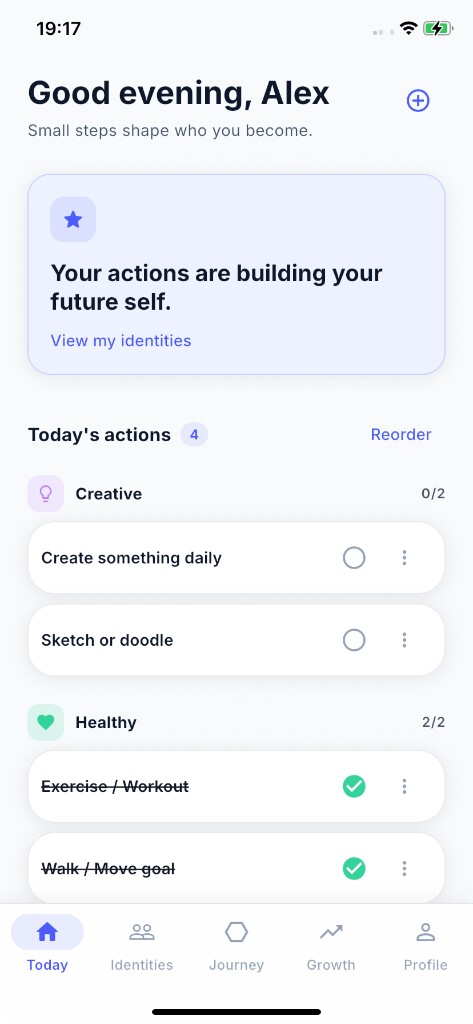
Keep the sequence visible. Import Recover From a Bad Day or Start Anyway so the steps live on your phone instead of in your head. When the freeze hits, you should not have to invent the first move from scratch. That invention is where days go.
Note: Ascend is a habit and identity tracking app, not medical or clinical treatment. If you are in crisis or need professional support, please contact a qualified healthcare provider or local helpline.
FAQ
Is Ascend an ADHD productivity app?
No. Ascend is for people who know what to do but cannot start. The goal is one tiny action, then continuing after missed days without shame. It is not a diagnosis tool or a treatment.
Is this medical advice?
No. Ascend is a habit app. If you need clinical support for ADHD or mental health, talk to a qualified professional.
What happens if I miss a few days?
You continue. Rescue Mode and Recover From a Bad Day are built so a gap does not reset your momentum or send you into a shame spiral.