
The freeze
Paralysis looks still. Internally it is loud. You run simulations of starting, failing, being seen, doing it wrong, doing it too late. The body stays put because every simulated path feels expensive.
Naming the freeze helps a little. It is not a diagnosis you have to earn. It is a state: initiation is offline. Treat it like weather. Do not argue with weather. Change the first input.
The shame spiral
Once you notice the freeze, a second loop starts: I should not be like this. That loop uses the energy you needed for the task. Then you avoid the tracker because it would confirm the story. A day becomes a week.
Interrupt shame with a smaller definition of success. A start counts. A glass of water counts. You do not have to like that. It still works.
The 30-second rule
Give yourself 30 seconds of starting, not 30 seconds of finishing. Stand up. Open the thing. Put your hand on the object. When 30 seconds ends, you may stop. The rule is honest or it will not be used.
The first physical action
Pick one: feet on floor, curtains, water, shoes. Then two minutes of the task if you can. If you cannot, the physical action was still the break. Import Start Anyway if you want that sequence waiting for you tomorrow instead of reinventing it in the freeze.
What to do after you break the freeze
Paralysis often returns mid-task. That is normal. When it does, do not restart the shame loop. Run the 30-second rule again: one physical move, two minutes of work, permission to stop.
If you stopped after the physical action only, the freeze still broke. You changed inputs. Log it. Close the loop. Tomorrow, same first move before you argue with the whole task.
When paralysis is a pattern, not a moment
Everyone freezes sometimes. If every afternoon looks the same, look at what happens right before the freeze: hunger, open loops, a task with no visible first step, a room that asks too many decisions at once.
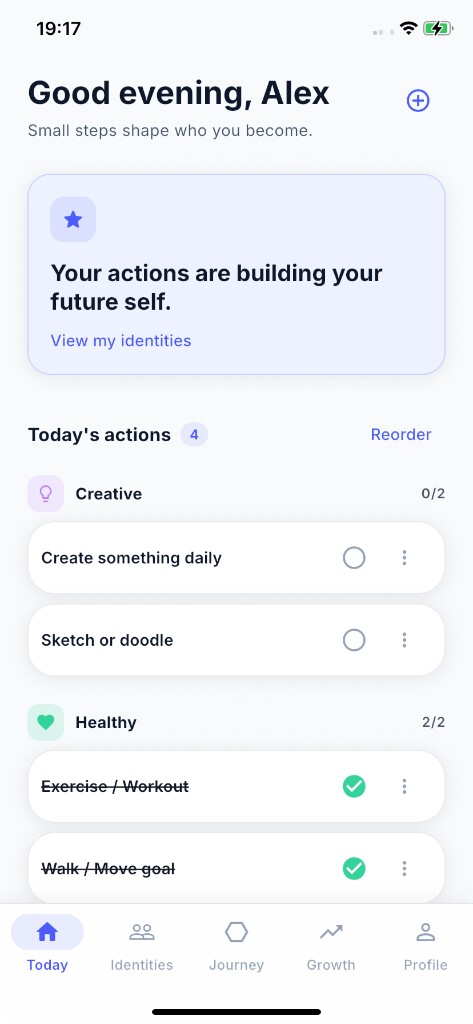
Shrink the environment before you shrink the task. One tab. One object on the desk. One next action in Ascend instead of a list of fifty. Paralysis is often a signal that the starting line was drawn too far from where your body actually is.
Practice the 30-second rule before you need it
In a calm moment, write the physical first move on a sticky note or import Start Anyway. In the freeze, you will not invent a good first move. You will rehearse failure.
Run the rule once on a low-stakes task so your body learns the pattern: physical move, two minutes, permission to stop. When the high-stakes task arrives, the path is familiar.
Note: Ascend is a habit and identity tracking app, not medical or clinical treatment. If you are in crisis or need professional support, please contact a qualified healthcare provider or local helpline.
FAQ
Is Ascend an ADHD productivity app?
No. Ascend is for people who know what to do but cannot start. The goal is one tiny action, then continuing after missed days without shame. It is not a diagnosis tool or a treatment.
Is this medical advice?
No. Ascend is a habit app. If you need clinical support for ADHD or mental health, talk to a qualified professional.
What happens if I miss a few days?
You continue. Rescue Mode and Recover From a Bad Day are built so a gap does not reset your momentum or send you into a shame spiral.